
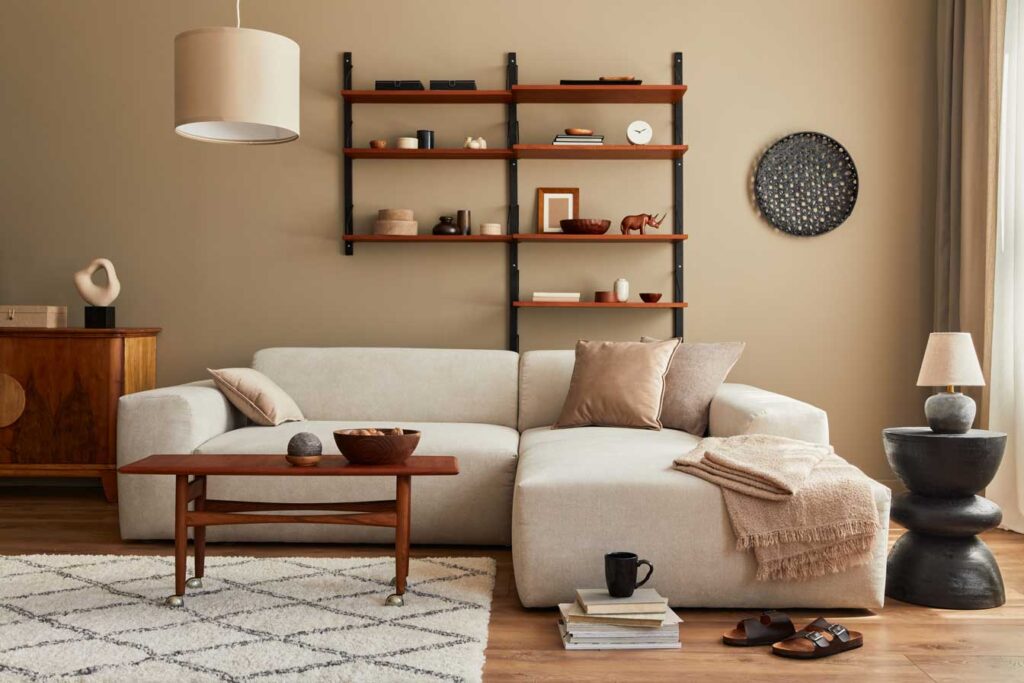
How Design Thinking Transforms Spaces and Experiences
Most spaces fail not because they look bad, but because they do not work the way people actually live, move, or feel. You can have premium finishes, expensive furniture, and flawless execution, yet the space still feels off. That disconnect usually comes from one missing element: design thinking.
In our experience at Bluearch Architects, the most successful projects are not the most visually dramatic ones. They are the ones where people instinctively feel comfortable, oriented, and understood the moment they enter. That does not happen by chance. It happens when design thinking drives every decision, from layout to material choice to how light hits a wall at different times of the day.
Design thinking is not a buzzword for us. It is a working method that transforms static spaces into experiences that support real human behaviour.
Design Is Not About Objects, It Is About Outcomes
A common misconception is that design thinking is about creativity or aesthetics. It is not. It is about outcomes.
We have seen projects where beautiful design elements failed because they solved the wrong problem. A dramatic staircase that disrupts circulation. A statement wall that reflects glare all day. A kitchen island that looks impressive but blocks movement during peak hours.
Design thinking starts by asking why before deciding what. Why does this space exist? Why do people use it the way they do? Why does something feel uncomfortable or inefficient?
At Bluearch Architects, we treat every space as a system of behaviours, not a collection of rooms. When you design for behaviour, the experience improves automatically.
Understanding People Comes Before Drawing Plans
One of the biggest shifts design thinking brings is this: users come before layouts.
In traditional workflows, planning often begins with room sizes and furniture placement. In design thinking, we begin with people. How they arrive. How long do they stay? Where they pause. Where they feel rushed. Where they need privacy or openness.
We have seen this approach completely change design directions. A family that needed fewer bedrooms and more shared space. An office that required fewer cabins and better acoustic zoning. A retail space where dwell time mattered more than display density.
Design thinking transforms spaces by aligning them with actual human needs, not assumed ones.
Empathy Is a Design Tool, Not a Soft Skill
Empathy is often talked about vaguely in design conversations, but in practice, it is one of the most technical tools we use.
At Bluearch Architects, empathy means understanding friction points. Where people get confused. Where they feel constrained. Where stress builds up.
For example, in compact homes, we have observed that stress often comes from clutter visibility rather than lack of space. This insight leads to concealed storage solutions rather than simply adding shelves.
In workplaces, fatigue often comes from constant visual noise and poor lighting, not long hours alone. That changes how we approach spatial planning and material selection.
Design thinking transforms experiences by addressing emotional responses, not just physical requirements.
Spaces Should Guide Behaviour Without Instructions
A well-designed space does not need explanation.
One of the clearest indicators of strong design thinking is intuitive navigation. People should know where to go, where to sit, where to pause, and where to move without signage or instruction.
We have seen this principle work across typologies. In homes, furniture placement subtly directs movement. In offices, zoning helps people switch between focus and collaboration naturally. In commercial spaces, layouts influence browsing patterns without force.
Design thinking focuses on these micro interactions. When done right, the space teaches people how to use it.
Why Experience Matters More Than Visual Impact
Visual impact fades quickly. Experience does not.
We have worked on projects that looked impressive on day one but became frustrating over time because experience was not prioritised. Poor acoustics. Inadequate storage. Harsh lighting. Inefficient workflows.
Design thinking shifts focus from first impressions to long-term usability. It asks how the space performs on a Monday morning, not just during a photo shoot.
At Bluearch Architects, we evaluate success by how a space ages. Does it adapt? Does it reduce friction? Does it support change?
This is where design thinking truly transforms spaces. It makes them resilient.
The Role of Iteration in Better Design
Another critical aspect of design thinking is iteration. The first idea is rarely the best one.
We have seen many projects improve dramatically by testing assumptions early. Mock layouts. Scenario planning. Walking through use cases before finalising designs.
Iteration helps identify blind spots. It reveals what works in theory but fails in practice.
Design thinking allows room for refinement. It accepts that better solutions emerge through testing, not certainty.
Common Mistakes When Design Thinking Is Misused
Design thinking is often misunderstood or applied superficially.
One common mistake is using it as a presentation narrative rather than a working process. Another is confusing user opinions with user needs.
We have seen projects derail when too many unfiltered inputs are treated as design direction. Design thinking is not about pleasing everyone. It is about solving the right problems effectively.
Another mistake is stopping at the concept level. True design thinking must carry through detailing, execution, and post-occupancy evaluation.
When Design Thinking Requires Restraint
Not every space needs radical reinvention.
In some contexts, over-application of design thinking can complicate simple requirements. Utility-driven spaces, regulatory environments, or highly standardised functions sometimes benefit more from clarity than experimentation.
At Bluearch Architects, design thinking is applied selectively. It is a framework, not a formula. Knowing when to simplify is as important as knowing when to innovate.
How Design Thinking Shapes the Bluearch Architects Process
Design thinking is embedded in how Bluearch Architects work.
Every project begins with listening. Client conversations, site observations, lifestyle analysis, and operational understanding shape the brief.
Design decisions are tested against real use scenarios. Materials are selected for performance, not trend value. Layouts are refined to reduce friction and enhance comfort.
This approach allows us to design spaces that feel considered rather than composed.
Design Thinking Turns Space Into Experience
The difference between a space and an experience lies in intention.
Spaces designed through design thinking feel coherent. They support daily routines. They reduce mental load. They allow people to focus on living, working, or interacting rather than adjusting to their surroundings.
We have seen clients describe this as feeling at ease, even when they cannot explain why.
That is the real transformation.
Final Perspective
Design thinking is not about doing more. It is about doing what matters.
When applied with clarity and discipline, it transforms spaces into environments that respond to people, not the other way around. It shifts design from decoration to problem-solving.At Bluearch Architects, design thinking enables us to create spaces not just seen, but experienced.